thinking: relating- celebrating :-)

by Jason Kemp
myimage3
  • Home
  • Contact
  • About
  • Products
  • Top 10 Posts
  • Ethos
  • Portfolio
  • Campaigns
  • Services

Leveraging Communities for Good

6 06 2009

One of the developing trends I have been noticing is the big rise in uber-connected people leveraging their social and business networks for a common cause. I support this but wonder if some of the media ripples from the all of this activity are being somewhat discounted?

communityThis used to be called cause-based marketing but the “m” word has slipped into the background a bit as many now just assume that Facebook, Twitter, Ning and all the other social media tools are part of the scenery.

In the early days on LinkedIn there was a kind of magic number for most people around 250 connections beyond which the social coherence became a bit misty. What I mean, is that the noise to signal ratio gets way out of kilter and a natural re-balancing starts to occur.

An endless stream of consciousness type “pulse” stream as it is called on Plaxo can be very annoying. Something I was reminded of when I connected my Twitter account to a Pulse stream for testing purposes and forgot about it resulting in far too much noise for sensible enjoyment.

Twitter is just the latest example of the arms style race for big numbers.

It used to be MySpace or StumbleUpon that had the big numbers and soaring traffic flows now its Twitter, FriendFeed and Ping.fm. There is something slightly disconcerting about all of this though. A kind of constant reinvention of channels where people shout at each other when that kind of thing only gets so far.

I heard the LongNow foundation described as kind of Slow food for Thinkers in a post called Slow Thinking and Fast Tweeting. I think (no pun intended) it  should have said Fast Thinking and Slow Tweeting :)

I can just hear one of my first employers favourite refrain at this point saying “What’s the action Point here. ” Words into deeds and all that.

Then later on – learning that action is no substitute for direction and vision and how to make sense of all the activity that passes for action. They are not the same things.

Vanitis vanatatum or Vanitas vanitatum omnia vanitas is putting is a bit too strongly but using a network to amplify communications does not amplify the sincerity or purpose of what we are about. 

The Long Now Foundation, which fosters long-term thinking and responsibility in the framework of the next 10,000 years. The Long Now is like the slow food movement for thinkers. It’s about thinking about the long term, and it’s also about slower, better thinking. Obviously they intend to be around for a long time.

They’ve got a bunch of interesting projects and wide-ranging seminars, including the option to place bets and vote on predictions about the future. At the moment, it’s Kevin Kelly’s prediction that “By 2060 the total population of humans on earth will be less than it is today.”

CEO Evan Williams of Twitter made these comment in response to a thoughtful post over at RRW. Titled:How Twitter’s Staff Uses Twitter (And Why It Could Cause Problems) This is under the section subtitled “What Does Twitter HQ Have to Say About This?”

“As you know, there are lots of different ways to use Twitter. Many people fall into the trap that you should follow all or most people back out of a sense of politeness or so-called engagement with the community.

But the fact is, having more followers does not give you more time in the day* (as much as I’d like to sell that). At a certain point, you’re not actually reading any more tweets by following more people — you’re just dipping into the stream somewhat randomly and missing a whole lot of what people say.

That’s fine, but I believe people will generally get more value out of Twitter by dropping the symmetrical relationship expectation and simply curating their following list based on the information and people they want to tune in to.

I follow almost 1,000 accounts.”

* my emphasis

Social data dipping, conversation mining  or random data mining may be useful for trend spotting and I’ve been using Nambu‘s tag fields to see what appears in the tag cloud styled rear window view.

And there is no doubt that exponential number stacking is far to watch but how does it really help with leveraging communities for social purposes besides gossip and chit-chat.

One idea I rather like is The NZ Centre for Social innovation uses WordPress (and Ning) to “bring together public, private and community partners to create new solutions to New Zealand’s most pressing social needs.”

The NZ Centre for Social Innovation programme also uses a Camp concept to leverage web technology over an extended period for social good projects.

“We’re bringing together a mix of social entrepreneurs, web developers, business specialists and creatives to propose and vote on our top 3 ideas to innovate out of recession.

Later in the year we’ll hold a full weekend SI Camp to develop the top ideas into working web prototypes, with prizes including cash, mentoring and web development assistance.”

Way back in the early days of MIS (what we called IT back in early ’80′s) there was a progression idea for leveraging systems through 3 stages.

  • Stage 1 was Simple transaction processing. The part where people scramble to get technology that works.
  • Stage 2 – Reporting and Analysis which leads to process mapping and re-engineering
  • Stage 3 – Competitive Advantage. Better practices over time as the insights are leveraged into better outputs.

I’m probably mis- remembering this esp. stage 2 (hat tip to Grant Furley.)  I’m sure there are other cycle or learning curve metaphors that could also describe this journey.

The point is in the early days its all about getting the basics right. Then absorbing the learning and adapting overall to new paradigms or Not (in some cases.)

Humans love patterns and we should relish the opportunity to drink from the firehouse of the internet but there is no substitute for actually getting together in person to solve problems over a cup of tea or other beverages.

I applaud the work of the Centre for Social Innovation in starting to move to the third circle / 3rd stage by extending the social networking tools to incubate and develop useful outputs for communities.

I also declare an interest here in helping to seed and develop dozens of blogs and online networks mostly by assisting with my WordPress expertise including WordCampNZ in Wellington on August 8th and 9th.

Very much looking forward to meeting some of the online collaborators who are indeed leveraging communities for good.

Comments : Comments Off
Categories : big ideas, culture, development

How to Survive Peak Oil by Acting Locally – 7 ways

13 08 2007

A key benefit of the book, The Last Oil Shock book by David Strahan, is found in the last two chapters in which he recommends a series of local and personal actions for urgent changes needed to survive this major threat.

In a chapter called “Pass-notes for Policy Makers” the book makes a broad recommendation to prepare as much as possible for the coming crunch by changing our consumption behaviours and managing our exposure to the main risk factors.

He also notes (quoting Thierry Desmarest – CEO of Total in 2006) that voluntarily reducing consumption by half could delay the expected peak by up to 10 years; however- we all know that this is highly unlikely without a massive epiphany.

Global warming* and the need for carbon management has now widely entered the public consciousness – peak oil needs to do the same.

Here are 7 things that you can start doing now.

  1. Educate yourself and your friends and vote accordingly. More articles here
  2. Make your own action plans for your country (check the Oil depletion atlas and file – Forecasts here. For example Asia-Pacific region, New Zealand Oil peak forecast year 2008, Australia – peaked in 2000, Japan peaked in 1992, USA peaked in 1970 while Canada is predicted to peak in 2034. Example spreadsheet from Energyfiles for New Zealand – others available.
  3. Reduce your own personal exposure to oil and energy shocks by reducing use of such resources. (Use more public transport, drive less, become a town planner and stop those idiot developers building carpark based shopping malls in the middle of nowhere – you get the idea.) More examples here try reducing by 3% each year.
  4. Use renewable energy sources where you can.
  5. Pressure politicians by finding out what their energy policies are and what they plan to do about the impacts of peak oil.
  6. Support public transport changes such as changing from diesel powered trains to electric in Auckland for example.
  7. Pressure for policy changes on roading and transport projects.

What we need to do now to to move from general actions towards specific actions in each country. As I live in New Zealand I am particularly interested in what can be done here at both the political level and the personal one.

What Is Your Local Energy Profile?

The New Zealand Energy Data File is available online website at MED.

  • Total primary energy supply decreased from 747 PJ (petajoules) in 2005 to 741 PJ in 2006, a 0.8% decrease;
  • Coal production increased 9.7%, from 139 PJ in 2005 to 153 PJ in 2006. Coal consumption for electricity generation decreased 4.8% to 52PJ from 2005 to 2006 and remained about the same for other sectors;
  • Total electricity generation increased 0.9% to 42,056 GWh (gigawatt hours) in 2006. Renewable electricity generation accounted for 66% of total electricity generation;
  • Natural gas production increased by 2.0% in 2006 to 163 PJ;
  • Total national consumption of petrol and diesel remained relatively constant around 221 PJ. During this period:
    Premium petrol was 24 PJ, up 5.9%
    Regular petrol was 89 PJ, down 1.4%
    Diesel was 108 PJ, up 0.7%

What about New Zealand’s position on Peak Oil?

The following exchange of questions comes from a New Zealand parlimentary debate on 26th July 2007 between the Jeanette Fizsimons -Co-leader of the Greens and the Government Finance Minister. (Green links on Peak Oil here.)

“What economic and fiscal strategies is he developing to prepare New Zealand for the impact of an “extremely tight” oil market within 5 years where oil production may not be able to keep up with demand, as predicted by the International Energy Agency’s Medium-Term Oil Market Report earlier this month?”

Dr MICHAEL CULLEN (Minister of Finance) : “Low debt and projected surpluses give New Zealanders as much fiscal flexibility to respond to changing circumstances as almost any other developed country has. The development of an emissions trading system, and measures to support energy efficiency, to support biofuels, and to support passenger transport will help directly. Of course, as oil prices rise, individuals also react, by, in fact, adjusting to more efficient vehicles.”

Jeanette Fitzsimons: Will he discuss with his colleague the Minister of Energy the need to amend this statement in the draft New Zealand *Energy Strategy: “It is unclear whether conventional oil production will peak in the next decade, or a decade or two later.” so that it reflects a greater sense of urgency, given that the Government has always relied on the *International Energy Agency’s fool’s paradise view that we still have around three decades until peak oil, despite all the other views to the contrary?

Dr MICHAEL CULLEN: “I do not propose to do that at this stage, at all. I am old enough to remember the report from the **Club of Rome in, I think, 1975, stating that we would have run out of oil by this point. In fact, proven commercial oil reserves now are still larger than they were 20 years ago.”

Later in this exchange Cullen notes that

Petrol prices at the pump now are significantly lower in real terms than they were, for example, in the early 1980s. It is not as though we have not been through these kinds of variables before. It is important to remember that other countries are going through the same experience…..

Jeanette Fitzsimons: Can the Minister place on record, then, that he expects the current rise in oil prices to be a temporary phenomenon, just as the oil price rises in the 1970s were, and that it does not signal a long-term depletion of oil supply?

Hon Dr MICHAEL CULLEN: I thought it was very clear from what I said that that was not what I was saying, at all—in fact, rather the opposite. I said that I expect that there are long-term pricing signals here that will lead to significant change in behaviour and practices by individuals, by business, and by others.

Jeanette Fitzsimons: I seek leave to table an article quoting *Goldman Sachs Group headed: “$100 oil price may be months away says..”

Frankly – it doesn’t seem that reassuring to me. Latest prices for oil are here

A comprehensive view to 2030 of global oil and natural gas – Working Draft US

This is from the National Petroleum Council in the U.S and is a major report called “Facing the Hard Truths About Energy,” which involved 350 participants and was led by former Exxon Mobil chairman Lee Raymond. (Exec Summary pdf.) July 18, 2007.

These 5 key recommendations are also referred to as “5 core U.S Strategies” :

  1. Moderate the growing demand for energy by increasing efficiency of transportation, residential, commercial, and industrial uses.
  2. Expand and diversify production from clean coal, nuclear, biomass, other renewables, and unconventional oil and natural gas; moderate the decline of conventional domestic oil and gas production; and increase access for development of new resources.
  3. Integrate energy policy into trade, economic, environmental, security, and foreign policies; strengthen global energy trade and investment; and broaden dialogue with both producing and consuming nations to improve global energy security.
  4. Enhance science and engineering capabilities and create long-term opportunities for research and development in all phases of the energy supply and demand-system.
  5. Develop the legal and regulatory framework to enable carbon capture and sequestration (CCS). In addition, as policymakers consider options to reduce CO2 emissions, provide an effective, global framework for carbon management, including establishment of a transparent, predictable, economy-wide cost for CO2 emissions

The Council identified these strategies by drawing upon more than 350 expert participants with wide-ranging backgrounds to provide analysis, information, and insight. Additionally, extensive outreach efforts involved more than 1,000 people actively involved in energy. Task Groups for this study reviewed a broad range of public and aggregated proprietary studies in order to understand and evaluate the many assumptions and forces behind recent global energy projections.

Given the massive scale of the global energy system and the long lead times necessary to make significant changes, concerted actions are needed now to promote U.S. competitiveness by balancing economic, security, and environmental goals. (Slide show version here.)

More International Research

Here are 80 global Energy Reports from UK based Energy Pointers including a A 218-page Australian Senate Standing Committee report examining Australia’s future oil supply and alternative transport fuels. There is plenty of reading so you can write your own action plans.

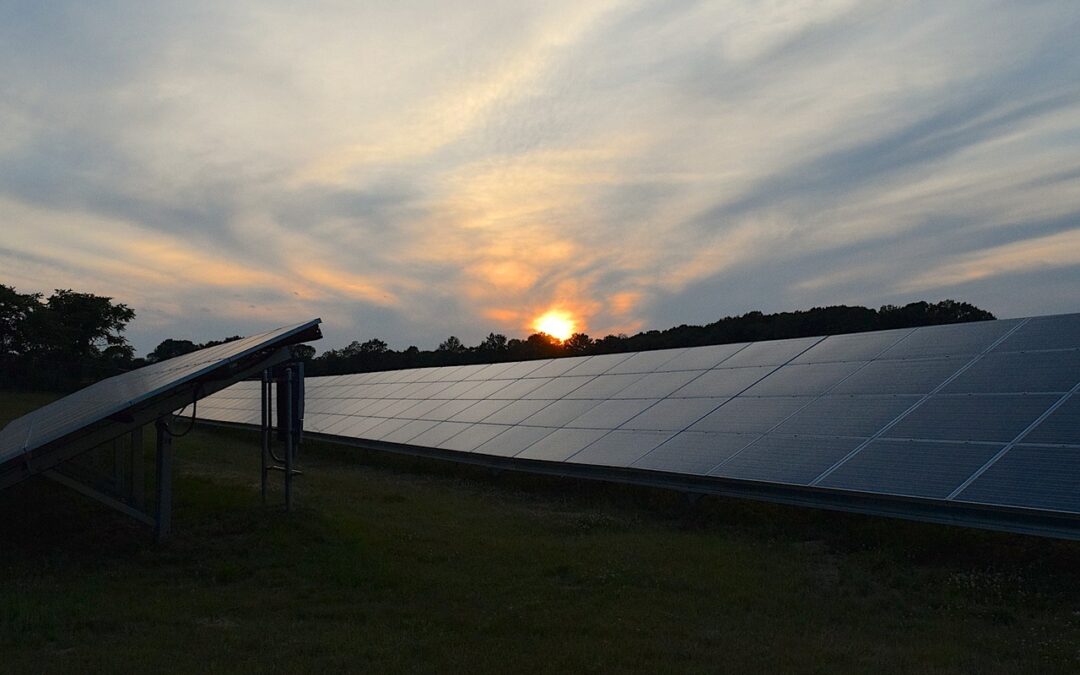
A solar policy success story in Germany

In a promising example of how to encourage alternative energy use Germany has managed to mobilise thousands of people to take part in generating electricity via solar in a massive public policy

“Even though millions of Germans flee their damp, dark homeland for holidays in the Mediterranean sun, 55 percent of the world’s photovoltaic (PV) power is generated on solar panels set up between the Baltic Sea and the Black Forest.

So far just 3 percent of Germany’s electricity comes from the sun, but the government wants to raise the share of renewables to 27 percent of all energy by 2020 from 13 percent.”

“There are now 250,000 jobs in Germany in the renewables energy sector. Asbeck expects the number of jobs in solar power alone to double to 90,000 over the next five years and hit 200,000 in 2020.”

They passed a law (EEG) which has helped change behaviour immensely. This is the most interesting part of the story. Perhaps we can learn from Germany on what the best mix of public policies and practical logistics is so that we change global energy behaviours. The incredible thing is that solar energy is not that suited to the German weather patterns and so other countries with more sunshine could do even better.

Also a 40MW solar plant is under construction right now and expected to be completed by 2009.

“Construction on a 40 megawatt (MW) solar generation power plant is under way at a former military base in the Saxon region of Germany. The total surface area of the planned photovoltaic (PV) installation? It’s comparable to about 200 soccer fields, said Matthias Willenbacher, cofounder and CEO of the juwi group.”

Germany takes second place only to Japan in the world in photovoltaic power generation.

Japan leads the world in solar innovation for example spherical-shaped solar cells which is well worth exploring in a later piece.

In Melbourne, Australia a company called Solar Systems has received government funding to proceed with construction of a 154-megawatt solar power station in Victoria. It will be the bigest if the world if completed. There are also major solar projects (150Mw) in Algeria that have been announced recently although the lead times are very long.

Useful links for Tracking Oil related Topics in New Zealand

  • Oil Archive on Scoop
  • Energy Policy Archive on Scoop
  • ASPO Association for the Study of Peak Oil and Gas in New Zealand.
  • Futures Trust
  • Crown Minerals Petroleum Outlook for New Zealand
  • Draft New Zealand Energy Strategy final version to be presented in September

Small Oil Find in NZ

The new Tui oil field doesn’t figure in the Energyfiles data as it is new, offshore and although estimates are promising – relatively unproven. Production started on 30th of July 2008. It is expected to produce 50,000 barrels a day and 10m barrels in the first year. The exploration company last year capped a gas find in Canterbury as it wasn’t viable. Tui is part of a group of fields in the Taranaki basin that could be promising although other commentators are not so hopeful. The latest information on these finds is released to the ASX as noted here. Tui shipped its first 300,000 barrels to refineries in Australia just this week. The Great South Basin has a few people excited. ExxonMobil and OMV have committed up to $1.2b in exploration resources.

*Global warming now has major recognition now and there is even a book on the NZ effects called Hot Topic by Gareth Renowden. Using the latest evidence from the Intergovernmental Panel On Climate Change’s Fourth Assessment Report, Gareth Renowden puts climate change into its New Zealand context.

And here How vulnerable to oil shocks are we, really? from the Oil Drum

And an audio interview podcast between David Strahan and George Kenney at Electric Politics

And get informed read up on The Oil Depletion Protocol Project which is an initiative undertaken by Post Carbon Institute, in association with Richard Heinberg, to lay the groundwork for and facilitate the successful adoption and implementation of the Protocol.

This is Part 3 of a 4 part series. See these related posts in the series.

  • (1) Green futures and the last oil shock
  • (2) Why Alternative Energy Can’t Save Us from Peak Oil
  • (3) How to Survive Peak Oil by Acting Locally – 7 ways (this one)
  • (4) Some Conclusions on Peak Oil – Urgency Needed
  • See also

  • NZ Energy Strategy
  • and NZ Energy Strategy- Transport Summary

Techorati Tag“last oil shock”, “David Strahan”, “peak oil theory”, “energy strategy”, “oil shock”

Comments : 4 Comments »
Categories : big ideas, development, industry futures

Green futures and the last oil shock

7 08 2007

At school my daughter is a very excited member of the Enviro Explorers who aim to treasure the environment while many of us parents drive them to school in huge gas guzzling cars. How shortsighted is that?

Incredibly it seems that despite 30 years of rising environmental awareness we still haven’t been convinced to significantly change our energy consumption behaviours.

In a video presentation on sustainability Alex Steffen makes the good point that we are currently using up enough resources to use up 5 planets worth (or more) and that the way that those resources are being used is also very unfair and extremely difficult to change.

John Doerr thinks that going green may be our “biggest economic opportunity of the 21st century” and his VC firm has invested US$200m in green-tech to try and find out. Both of these presentations are available on video at Ted.com

Despite better resources and greater need than ever – invitations by Alex Steffen and John Doerr to explore the bright green future are being downplayed while we continue to trash the planet.

What could be more important than global warming? Answer: Peak Oil

I’ve been reading The Last Oil Shock by David Strahan and it is a tough read because all of the usual arguments for technical progress (saving the day) are easily demolished. See also this piece by David on what the Stern Report got wrong.

“The Stern review on the economics of climate change completely fails to acknowledge the imminent decline in global oil production”

Despite the theory of peak oil having been around since 1956 many of us are still in extreme denial about what happens when oil prices quadruple or more. The change impacts that come from this when barrel prices are $70 now, but could easily get to $200-300/ per barrel – is so totally shocking that it is hard to think about.

Hubbert’s original peak oil theory was repeated by him using different models in 1962 and 1967 but it was not until the oil shocks of 1973 that his and others analysts warnings were taken seriously at all.

Our lifestyles and civilisation as we understand it is so closely tied to oil. Consider that for every barrel of oil we produce – we now consume 3. Or that 95% of oil reserves have been identified and largely extracted.

The Last Oil Shock

In very simple terms we running out of oil FAST and none of the other energy sources that have been trialled can replace the very high energy density of oil. Strahan backs up his test with research with and comes across as a thoroughly moderate and reasonable commentator on the subject.

Peak oil theory does attract some extreme views, which is not surprising for something that represents the end of a long expansionary phase in human history. However while some of the highly probable scenarios are depressing there are positive signs.

The subtitle of the book is “A Survival Guide to the Imminent Extinction of Petroleum Man.” It is an essential read for policy makers anywhere and those who care about their friends and families would do well to consider the personal implications of the action plans at the end of the book.

3 Book Reviews – (to buy your copy)

Paul Chefurka recommends the book.

“A recent Peak Oil book by David Strahan called The Last Oil Shock (which I cannot recommend highly enough) contains a pointer to an analysis that supports the worriers and discredits the economists’ optimism.”

Chefurka elaborates on the theories of Kummel and Ayres(1) who found a much better way to understand and explain the true economics of energy which is one of the more interesting parts of the book in Chapter 5 – First Principles. Paul also has another essay on his site in which he adds some thoughts on how we can understand some of this better if we compare it to the 5 stages of grieving scale (Denial, Anger, Bargaining, Depression, Acceptance) by Elizabeth Kubler-Ross which is a fairly serious kind of response.

All things considered Paul is at the pessimistic end of the spectrum and appears also somewhat overwhelmed by many of the linked problems which he details on his site if you are brave.

Graham Strouts gives the book full marks and disagrees with the continued use of nuclear power as supported by Strahan as part of the pass-notes for policy makers section. He concludes with (full review at Zone 5)

“The Last Oil Shock is another powerful voice in the peak oil debate and sets a new standard in investigative journalism for the issue”

From my reading of the book – it seems that nuclear energy is not being favoured per sae. It is more an issue of having such a wide energy deficit that extending or prolonging existing nuclear facilities in the UK may help manage the transition demand peaks. But then again Nuclear is also running out of supplies as well.

Chris Sanders has plenty to say about the book and the subject.

The idea that modern civilization is unthinkable without petroleum only arises when one contemplates life with a lot less of the stuff, which no doubt explains the urgency behind attempts to discredit the notion that world oil production might actually be a finite input to the world economy..

One of the merits of this book is that it tackles head-on the obvious linkages between current events in the Middle East, repository of the last truly great reserves of oil in the world, and the fact that the West has gone to war by invading Iraq…

War for oil is one Inconvenient Truth that Al Gore will happily avoid.

The idea that most growth is a function of ever-increasing amounts of energy being used (Kümmel and Hall) that is being more efficiently employed (Ayres) is revolutionary enough, if simple. The fact that the fraction of growth it is responsible for is many multiples of that added by capital and labour is an embarrassment for the exponents of mainstream so-called neoclassical economics. Indeed, this is one of the more exciting prospects raised by peaking world oil and gas production: to tear down the temple that Marshall, Keynes, Friedman and others have built and replace it with an approach to understanding political economy that is intellectually honest, consistent with the basic physical principles of the universe we live in, pragmatic, and accessible to all.

This may be hoping for too much, but The Last Oil Shock is a good start.

His full review including graphs is here. (About Chris Sanders)

From my reading so far the real challenge of peak oil is that our present society seems to be incredibly short sighted about any kind of economic indicators. I just read this week that purchases of cars with larger than 3l motors has increased – partially due to the strength of the NZ$ against the US and a completely misguided view of the stability of oil prices.

The global level of fuel prices also has a major impact on demand perceptions around the world. For example in the UK prices of around $US7 per gallon compare to $US3 per gallon in many parts of the U.S and $US4.70 in NZ with prices in Japan also being quite high. (Note to do these calculations convert to US gallon which is smaller than UK gallon and convert to U.S $ to get a comparison.)

Note (1) Dr David Haywood notes regarding the Ayres Paper almost as a comment in passing. The significance of the Ayres research deserves a special post of its own.

“one of the best research papers I’ve read in years. Ayres and Warr (writing in Structural Change and Economic Dynamics) explain the Solow residual using the Laws of Thermodynamics. Totally amazing stuff that should be compulsory reading for anyone interested in economics.”

The Robert Ayres paper receives a very readable analysis by Strahan in Chapter 5 of the book where I would agree with him when he commented on the Solow Residual model from 1956 “a model that failed to explain over three quarters of what it sought to explain should be junked or thoroughly reworked.”

The significance of the Ayres theory is that efficiency gains in the use of energy can actually drive economic growth and this is the most exciting economics I’ve seen almost since ever. It is sometimes known as the economic theory of growth. I want to know why did it took 30 years to get a sensible result without a nonsensical residual?

For more on the Professor Robert Ayres theory – watch David Haywood’s column at Southerly and the science section at Public Address including such deliciously useful topics as

  • Can Thorium Reactors Solve the World’s Energy Problems? and
  • What on earth is a Grätzel solar cell, and why is it so important?

For clues on what happens next see the Oil Depletion Protocol. This is Part 1 of a 4 part series. See these related posts in the series.

  • (2) Why Alternative Energy Can’t Save Us from Peak Oil
  • (3) How to Survive Peak Oil by Acting Locally – 7 ways
  • (4) Some Conclusions on Peak Oil – Urgency Needed
  • See also

  • NZ Energy Strategy
  • and NZ Energy Strategy- Transport Summary

To buy in NZ The Last Oil Shock: A Survival Guide to the Imminent Extinction of Petroleum Man at Fishpond

Techorati Tag“last oil shock”, “David Strahan”, “peak oil theory”, “hubbert peak”

Comments : Comments Off
Categories : big ideas, development, TED

« Previous Entries


Google this site

Recent Comments

  • JasonK on Demise of Empire – 4 Horseman Film
  • Do you use WordPress? Wordcampnz next w/e « Department of Management and Marketing on Going to #wordcampnz? You Should
  • WordCamp Auckland 2012 | The Connector on About
  • JasonK on Reforming Civilization: Part 2
  • Noric Dilanchian on Reforming Civilization: Part 2
  • JasonK on Future of Online Shopping
  • Dan Milward on Future of Online Shopping

Recent Posts

  • About Guitar Gods and other lists
  • Have your say with oneBIGvoice
  • Symphony of Learning
  • TED 2012 the remix
  • Demise of Empire – 4 Horseman Film
  • Real Future of Ultra Fast Broadband in NZ
  • WordcampNZ 2012- that’s a wrap
  • Going to #wordcampnz? You Should
  • John Cooper Clarke in Auckland
  • Hyperbole Alert its Copyright Math time
  • Two Way Branding & Bananas
  • Reforming Civilization: Part 2
  • Making Sense of SOPA
  • Discovering New Music
  • Holiday Reading- Reforming Civilisation

Categories

  • applications (13)
  • big ideas (90)
  • blogging (4)
  • crmthinking (14)
  • culture (67)
  • development (9)
  • general business (24)
  • idealog (13)
  • industry futures (57)
  • music (1)
  • online marketing (13)
  • TED (21)
  • TEDx (9)
  • this blog (9)
  • WordPress (11)

SEO Book –

Adsense

Archives

Custom Search

Google
Custom Search

We like these

Remo Giuffre | TEDx Sydney

Fishpond


www.fishpond.co.nz

Tags

#wordcampnz business advice copyright creative commons creative generalist creativity culture customer capital David Cowan economics education energy policy Environment FaceBook finance flow future of online video innovation Jamie Wheal media media futures Microsoft mind/body music new media online marketing politics practical advice products as a service public policy Sean Gourley Share valuation social media Swine Flu TED TED Conference Teducation TEDx TEDxAkl Telecommunications training twitter wordcamp WordPress Zeitgeist Europe 2008


rss Comments rss valid xhtml 1.1 design by jide powered by Wordpress get firefox